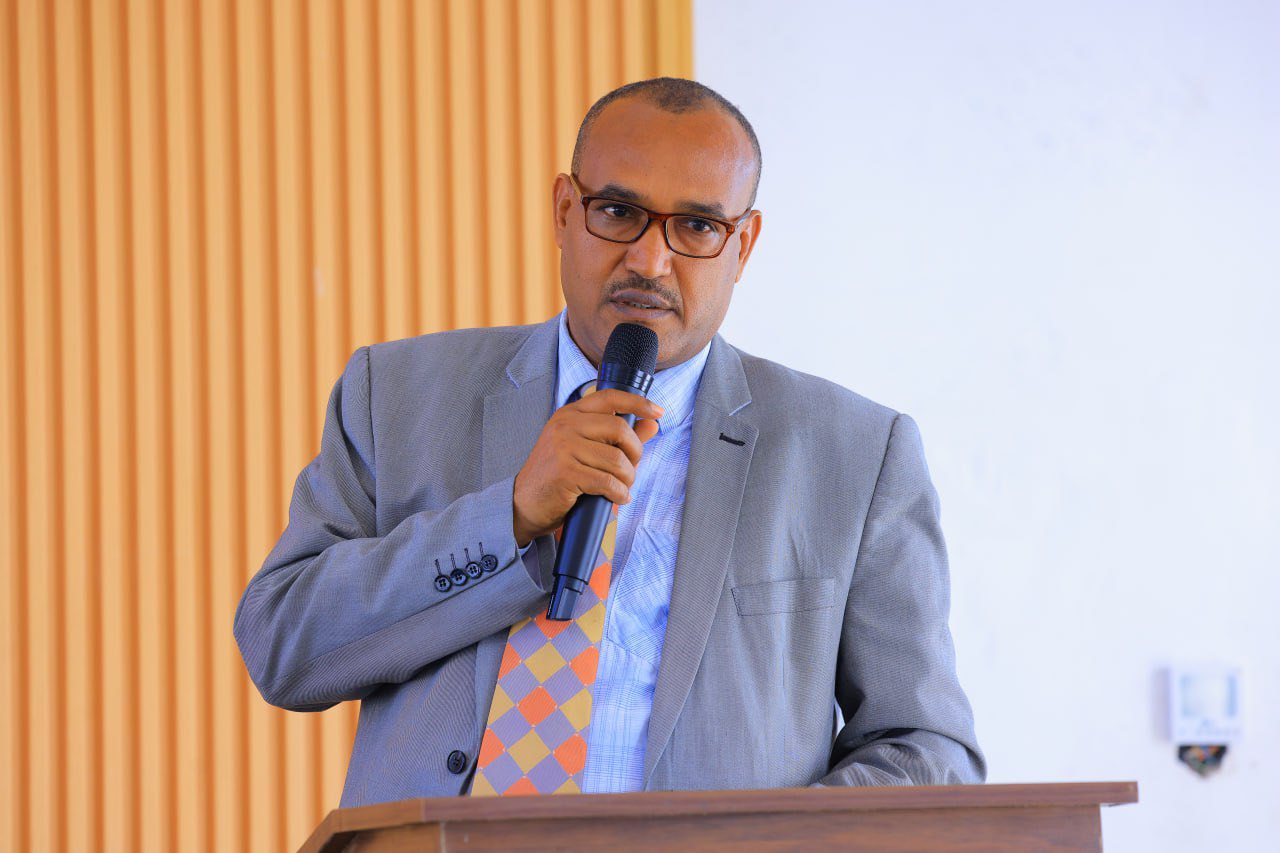
His Excellency Deputy President Mulualem Biazen
Amara region supreme court/ VICE president
In modern state structure, the courts are the third branch of government. Their main mission is to ensure rule of law by dispensing justice fairly and independently. They are expected to deliver justice without discrimination between persons on grounds of race, gender, social status or any other condition.
In Ethiopia Until 1900, justice has been rendered by the state and customary justice systems on the basis of various customary and religious laws including the Fetha Negest (law of the kings). After 1900 and especially since 1940`s, Ethiopia has introduced its modern legal system. Following the enactment of a new Federal constitution in 1995, Ethiopia chose to follow a federal state structure which allows the establishment of a two tire parallel court system. Accordingly, courts are established at the Federal and State level having their respective jurisdictions on Federal and state matters. In addition to their judicial power over State matters as provided by regional constitutions, regional courts also exercise jurisdiction over federal matters on the basis of delegation as specified in the Constitution of the Federal Democratic Republic of Ethiopia.
The Amhara Region`s courts have been working to ensuring delivery of fair and impartial judicial services in accordance with the power and responsibility entrusted to them by the 1995 Federal Constitution, the Region`s revised constitution of 2005 and the various detailed legal frameworks issued from time to time. Hence, over the past 30 years the region`s courts have built a reputation in the provision of quality judicial service and producing justices of the highest standard.