
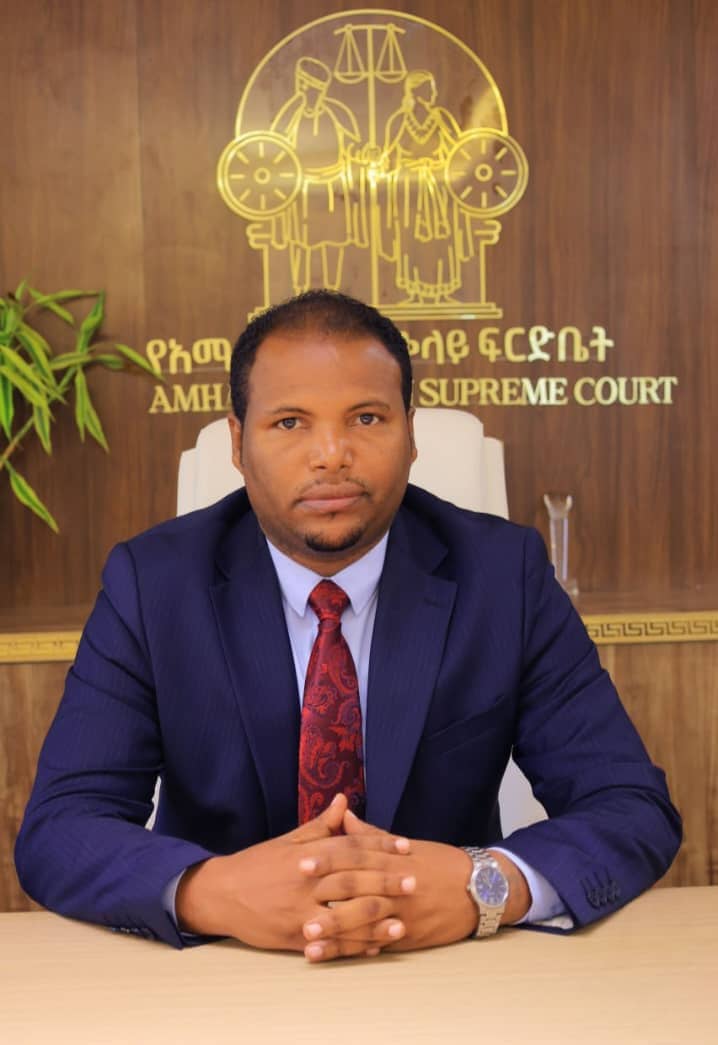
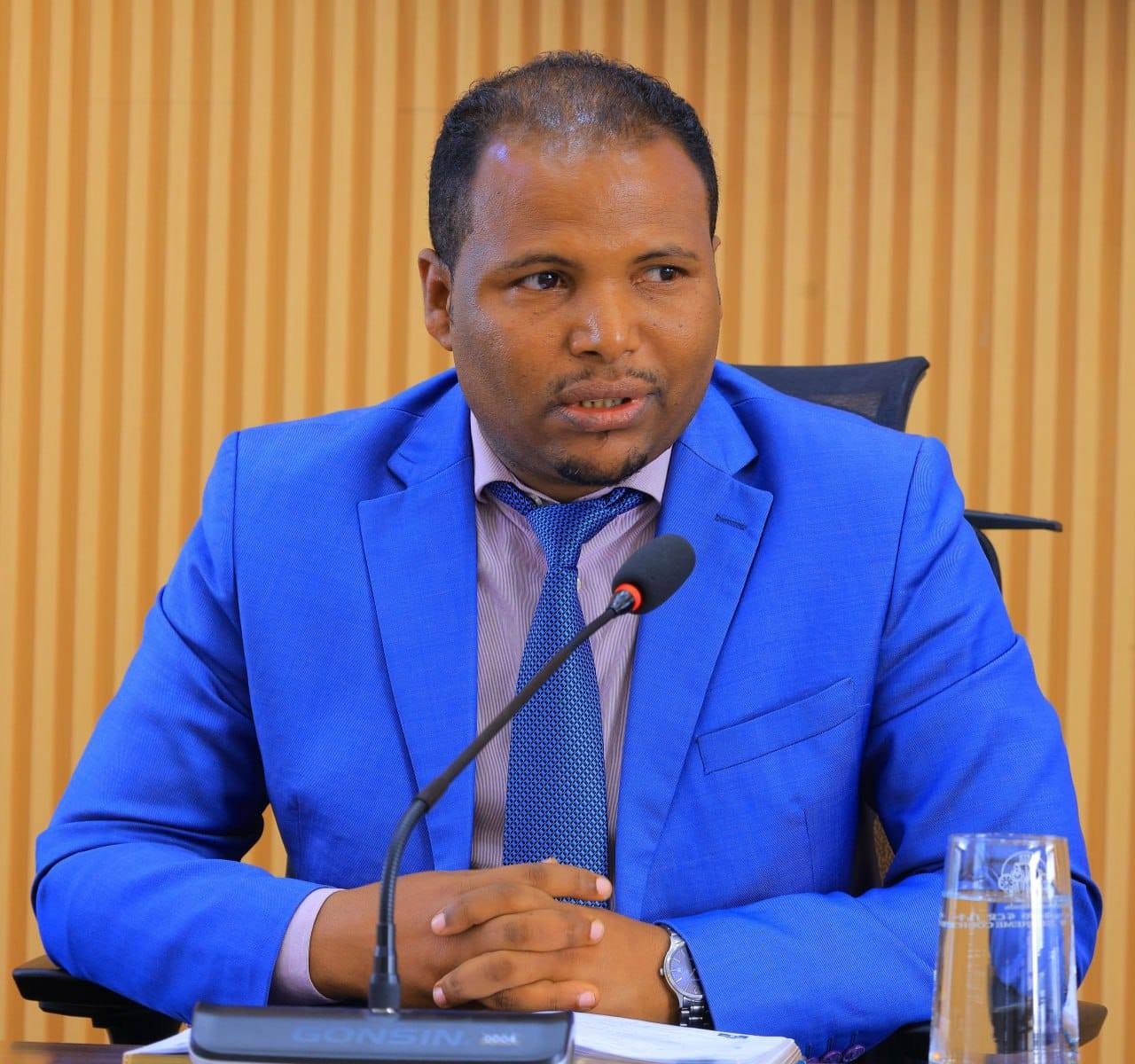
His Excellency Alemante Agidew
In modern state structure, the courts are the third branch of government. Their main mission is to ensure rule of law by dispensing justice fairly and independently. They are expected to deliver justice without discrimination between persons on grounds of race, gender, social status or any other condition.In Ethiopia Until 1900, justice has been rendered by the state and customary justice systems on the basis of various customary and religious laws including the Fetha Negest (law of the kings). After 1900 and especially since 1940`s, Ethiopia has introduced its modern legal system. Following the enactment of a new Federal constitution in 1995, Ethiopia chose to follow a federal state structure which allows the establishment of a two tire parallel court system. Accordingly, courts are established at the Federal and State level having their respective jurisdictions on Federal and state matters. In addition to their judicial power over State matters as provided by regional constitutions, regional courts also exercise jurisdiction over federal matters on the basis of delegation as specified in the Constitution of the Federal Democratic Republic of Ethiopia.
The Amhara Region`s courts have been working to ensuring delivery of fair and impartial judicial services in accordance with the power and responsibility entrusted to them by the 1995 Federal Constitution, the Region`s revised constitution of 2005 and the various detailed legal frameworks issued from time to time. Hence, over the past 30 years the region`s courts have built a reputation in the provision of quality judicial service and producing justices of the highest standard.
To continue with the strength of the region`s courts and further develop their capacity by duly filling existing gaps for better delivery of judicial services to the people, the Amhara Region Supreme Court has embarked on a comprehensive judicial transformation starting 2017 EC. Accordingly, it is working with a vision of becoming a symbol in the short term at national level and Africa and the world in the middle and long term respectively. For this purpose it has designed different strategies.
In just only one year (2017 E.C), decisive measures have been taken to ensure judicial independence including introducing legal frameworks for judge`s immunity, removing committee system that compromises judicial independence and making the judiciary accountable only to the council, introduced technological support for judicial services and creating conducive working environment for staff and for conducting trials. In addition, legal frameworks that will sustain and institutionalize reforms have been introduced. Other legal frameworks including a law for establishing cultural courts and measures aiming at strengthening Alternative Dispute Resolution (ADR) mechanisms have also been introduced. To make the region`s justice system more effective beyond the judiciary, the supreme court has carried out its responsibility of coordinating and chairing the region`s Joined Up Justice Forum and registered astonishing results. This has created high level of wakening on the judicial community and other justice organs in general and Judges and court employees in particular.
For the first time in the history of the court, the Amhara Supreme Court has organized a judicial conference for ten consecutive days (September 30- October 9, 2025) in the city of Bahir Dar under the moto ‘’common Vision for the strong Judicial System’’ where various issues have been discussed with more than 2400 judges of the region and reached a common understanding. This has provided an opportunity to extend and carryout the reform initiatives up to woreda level of courts and has greatly increased the motivation of judges and court personnel.
The Amhara Supreme Court has given special emphasis to human resource development. Accordingly, it is providing strategic support to make the region`s justice and law institute (JLI) a center of excellence following JLI`s re-establishment under proclamation No. 299/2027 reporting to the Supreme Court.
The regional government has extended its support to the judicial reform initiatives by allocating a relatively modest budget in the 2017 and 2018 EC budget year. This is a positive development expected to continue. Other government and non-government entities have also provided support and are closely working with judiciary more than ever before. The Amhara Supreme Court extends its gratitude with high regard.
In the coming period, we will make fundamental improvements in working procedures and legal frameworks both at the Supreme Court and the Justice and Law Institute to put the ongoing transformation initiatives on a firm foundation. In addition, operationalizing cultural courts in all areas of the region and ensuring their sustainability, constructing a new standardized supreme court building that will much the region its people, establishing an international arbitration training center, rule of law and peace center, organizing an independent public defense office, and continuing the digitalization work with more vigor and dedication will continue to be our focus areas.
While the judiciary is working with great diligence and determination to realize its vision and mission, independent, predictable, efficient and effective judicial service would not be achieved on the effort of the judiciary alone. I therefore, call up on all justice institutions, government executives at every level, the legal community, those who are responsible in the provision of evidence during court proceedings, the general public and all concerned bodies to support more than ever before the transformation journey started by the Amhara Supreme Court.
Justice with Integrity!
We strive to build Exemplary Courts!
Alemante Agedew Wondemeneh,
President of the Amhara Supreme Court

 አማርኛ
አማርኛ